Wind ensemble vs concert band: what the names really tell you
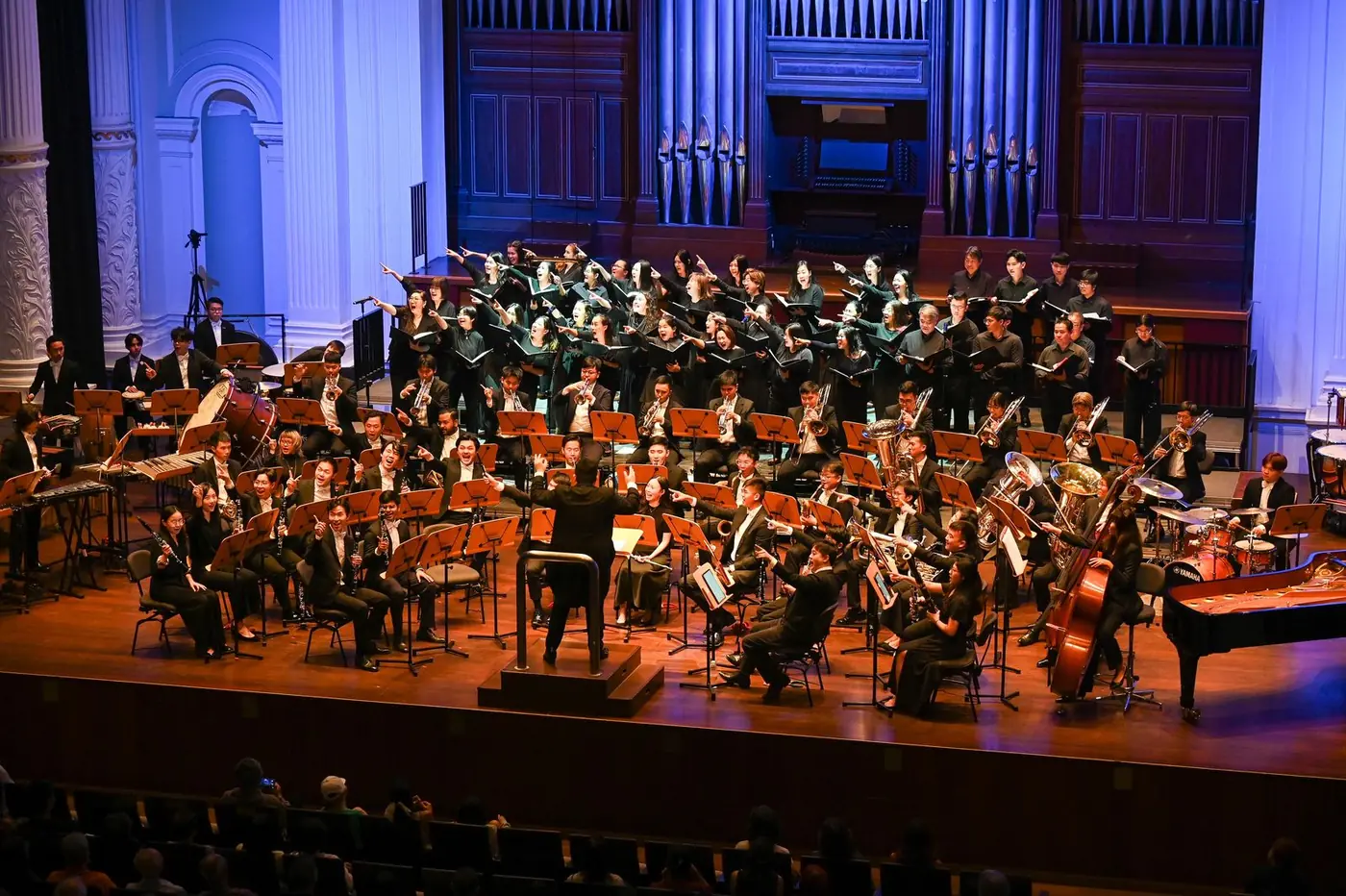
Every few weeks someone asks me about wind ensemble vs concert band. A parent sees “Wind Ensemble” on one school’s poster and “Concert Band” on another and wonders which is better. A student moving to a new school wants to know if symphonic band is a step up. So let me try to clear it up, the way I would explain it in a band room.
Wind ensemble vs concert band: the short answer
In most cases, these are all names for the same kind of group: woodwinds, brass and percussion, playing seated, in concert. Wikipedia’s article on the concert band lists wind band, wind ensemble, wind symphony, wind orchestra, symphonic band, symphonic winds and symphonic wind ensemble as other names for it. The classical music site YourClassical says the same thing: the concert band “goes by many names”, and it lists most of those same words.
So when you see one of these names, the instruments are the same family. What changes is the history behind the word, and sometimes the level of the group within a school.
If you want the basics first, our earlier guide on wind bands, concert bands and wind orchestras covers the instruments and how a band differs from a symphony orchestra. This article goes one step further into the names people search for most.
Where “wind ensemble” comes from
The name has a clear starting point. In the autumn of 1952, the conductor Frederick Fennell called the first rehearsal of the Eastman Wind Ensemble at the Eastman School of Music in Rochester, New York. His idea was simple and quite bold for its time. Instead of a fixed big band where six or eight clarinets might share a part, he used only one player per part, and changed the lineup from piece to piece to match exactly what the composer wrote.
That made every player responsible for their own line. Nobody can hide. YourClassical describes the result as section sizes brought “down to the fewest numbers possible” for a clean, controlled sound that can handle very advanced music.
So in its original meaning, a wind ensemble is a leaner group built on that one per part idea. Many groups now use the name more loosely, and a “wind ensemble” today can be large. But that is the history behind the word.
Concert band, symphonic band and wind symphony
“Concert band” is the everyday name. It tells you the band plays seated in concert, rather than marching. In Singapore, it is the name most of us grew up with, because school bands perform at SYF in the concert band category.
“Symphonic band” and “wind symphony” are usually chosen to suggest a bigger, richer sound, closer to a symphony orchestra. Some of the best known groups in the world use these names, such as the Dallas Wind Symphony, listed on Wikipedia’s concert band page. But there is no rule that says a group with “symphony” in its name must be larger or more advanced than one called a concert band.
Is a symphonic band better than a concert band?
Not by name alone. Where the names do mean something is inside a single school with several bands.
Many American high schools use the names to show levels. Amador Valley High School in California is a good example. It has five concert bands: Wind Ensemble I and II for auditioned students from 10th to 12th grade, two Symphonic Bands for mostly 10th to 12th graders, and a Concert Band for freshmen. There, “wind ensemble” is the top group and “concert band” is where new players start.
But that is one school’s system. Another school, or an adult group, might use the same words in a completely different way. If you want to know how good a band is, listen to it. The name on the poster will not tell you.
What about a stage band?
A stage band is a different thing altogether. The name is often used for a jazz big band. At Worcester Polytechnic Institute in the US, for example, the Stage Band is the top big band in its jazz programme.
A big band usually has four sections: saxophones, trumpets, trombones, and a rhythm section of guitar, piano, double bass and drums. The WPI Stage Band, for instance, plays swing, Latin, funk and fusion. A concert band is built differently, with full woodwind and brass sections and a large percussion section, and it plays classical and contemporary music written or arranged for band.
So what is VENTUS?
On our website we call VENTUS a wind orchestra, and many people also call us a wind ensemble. Both names fit what we do. We put more than 80 musicians on the Esplanade Concert Hall stage at the Singapore International Band Festival 2024, where we received Gold with Distinction in the Open Division. We play with a double bass and piano alongside the full wind and percussion sections.
Our players are music educators, professional musicians and advanced players. Many of us have played together for more than ten years, and we come to every rehearsal prepared, because we expect a high standard from each other in every session. If that sounds like the kind of group you would like to be part of, here is how to join a wind band in Singapore as an adult. You can also read more about our conductor on the conductor page.
FAQ
Is a wind ensemble the same as a concert band?
Usually they are the same family of instruments, and many groups use the names freely. In its original meaning, a wind ensemble has one player on each part, while a concert band may have several players sharing a part.
Which is more advanced, a wind ensemble or a symphonic band?
It depends on the school or group. In some American high schools, the wind ensemble is the top auditioned band and the symphonic band is the next level. The name on its own does not tell you the standard.
What is the difference between a stage band and a concert band?
A stage band is often a jazz big band, with saxophones, trumpets, trombones and a rhythm section. A concert band has full woodwind, brass and percussion sections and plays classical and contemporary band music.
Come and hear VENTUS
The best way to understand all of this is to hear it. On Sunday, 15 November 2026, VENTUS plays at 1:40pm at Waterfront Escapades in the VivoCity Amphitheatre, with hits from Harry Potter, Star Wars and Queen. Entry is free.
Then on Sunday, 24 January 2027, at 4pm, we present Sinfonica II at the SOTA Concert Hall, with three premieres by Singapore composers Germaine Goh, Syafiqah Adha and Zaidi Ramli, and student musicians on stage with us. Early bird tickets are $28 for the first 150 (promo code EARLYBIRD on BookMyShow).
Get tickets for Sinfonica IISources
- Wikipedia, “Concert band”
- YourClassical, “Concert Band 101: An introduction to wind ensembles”, 3 September 2019
- University of Rochester, “Nearing its eighth decade, a modern musical invention remains cutting edge”, 14 April 2022
- Amador Valley Music, “Concert Bands”
- WPI Jazz Groups, “Stage Band”
- Wikipedia, “Big band”
- VENTUS home page (Waterfront Escapades, Sinfonica II, about us)
- VENTUS, “Wind band, concert band or wind orchestra: what’s the difference?”