Wind band, concert band or wind orchestra: what’s the difference?
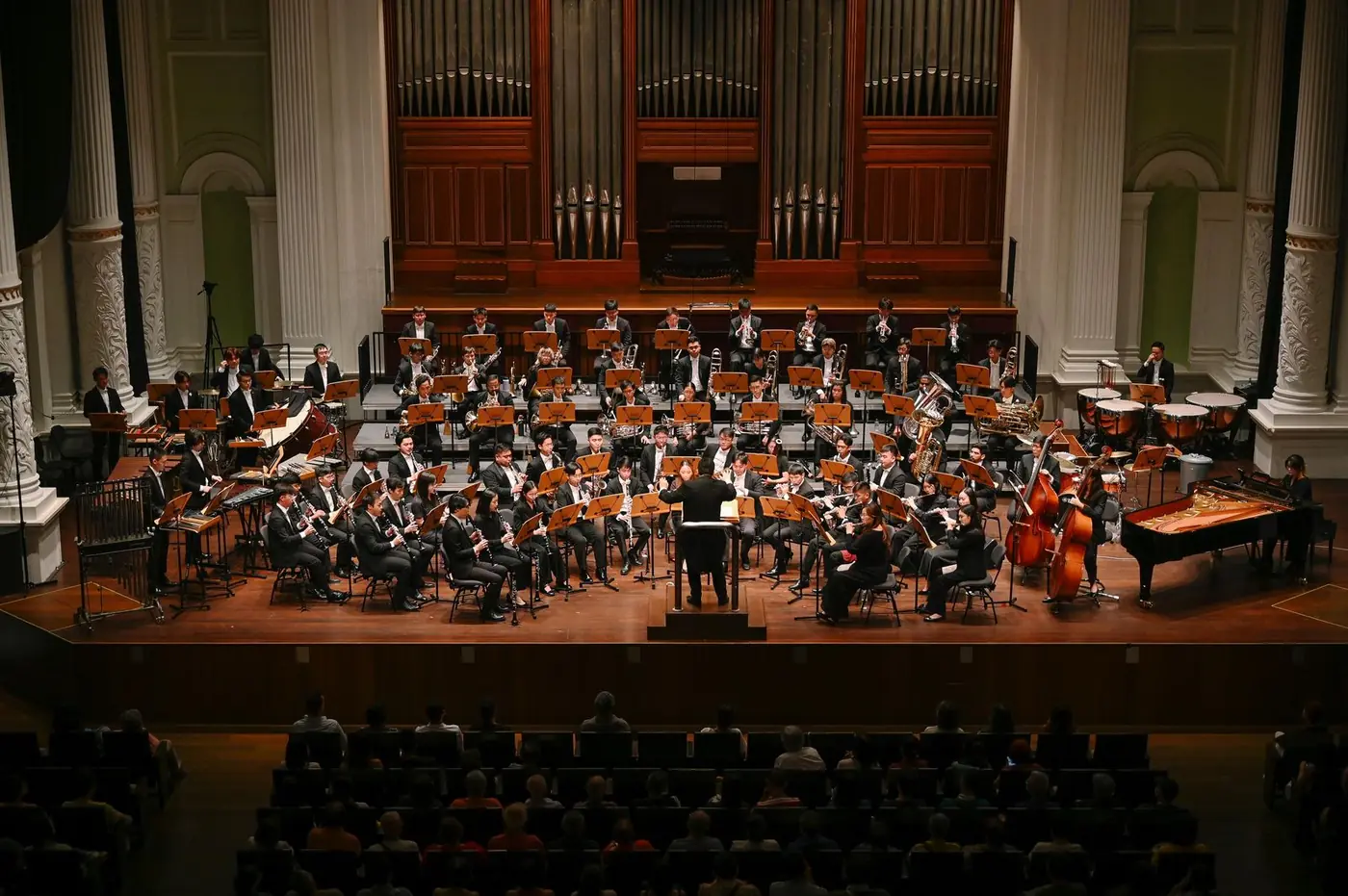
People ask me this all the time. A parent sees “Concert Band” on their child’s SYF schedule, then reads that VENTUS is a “wind orchestra”, and wonders if these are different things. A friend asks whether a wind ensemble is just a smaller band. Fair questions, because the names really do get mixed up, even among musicians.
Here is how I explain it to my students.
First, what they all have in common
Every one of these groups is built from three families of instruments:
- Woodwinds: flutes, piccolo, oboes, bassoons, clarinets and saxophones
- Brass: trumpets, French horns, trombones, euphoniums and tubas
- Percussion: timpani, drums, mallet instruments like the xylophone, and everything you can hit, shake or scrape
What they don’t have is the violin family. That is the big difference from a symphony orchestra, where violins, violas and cellos sit right at the front. In a band, the clarinets usually take on the role the violins play in an orchestra.
Wind band and concert band
These two names mean the same thing. “Concert band” simply tells you the band plays seated, on a stage, in concert, rather than marching on a parade ground. “Wind band” describes what it is made of.
In Singapore, most of us first meet this kind of group in school. The Singapore Youth Festival Arts Presentation lists it as Band (Concert), and that is the term you will see on SYF schedules every year. A school concert band can be anything from 30 to 80 students, with several players sharing each part.
Wind ensemble
A wind ensemble is usually smaller, and the idea behind it is different. In 1952 the American conductor Frederick Fennell started the Eastman Wind Ensemble with one player on each part, much like a chamber group. Every musician is exposed, so the sound is cleaner and the playing has to be very precise.
Today many groups use “wind ensemble” more loosely, but if you see the name, it often means a leaner group where each player carries their own line.
Wind orchestra and symphonic band
This is where VENTUS sits. A wind orchestra (some groups say symphonic band or symphonic winds) is a large, advanced wind group that plays music on the scale of a symphony orchestra.
Three things usually set it apart:
- Size and colour. More players in each section, and often extra instruments you don’t find in a school band, such as a double bass, piano, celesta, harp or a big percussion setup.
- Repertoire. Alongside music written for band, a wind orchestra takes on major orchestral works in arrangement, and difficult original pieces written for top level ensembles.
- Level of playing. The music asks for a richer, more blended sound and the kind of control you would expect from an orchestra.
Around the world you will see this name on some of the best groups, such as the Tokyo Kosei Wind Orchestra, and here at home on groups like the Philharmonic Wind Orchestra.
So why do we call VENTUS a wind orchestra?
Because of what we play and how we play it. At the Singapore International Band Festival 2024, we put more than 80 musicians on the Esplanade Concert Hall stage, with music by Shostakovich, Galante, Whitacre and Sparke, and came away with Gold with Distinction in the Open Division. At Sinfonica Voce in December 2025 we played Respighi’s Roman Festivals, one of the loudest, most colourful orchestral pieces ever written, in an arrangement for winds. Our players are music educators, professional musicians and advanced players, and we play with a double bass and piano alongside the full wind and percussion sections.
That doesn’t make a concert band “lesser”. Many of the pieces we love most were written for concert band, and every school band in Singapore is part of the same family. The name is really about the kind of music a group sets out to play.
A quick way to remember it
- Wind band / concert band: the family name. Woodwinds, brass and percussion, playing seated in concert.
- Wind ensemble: often one player per part. Lean, clear and exposed.
- Wind orchestra / symphonic band: a large, advanced group playing music on the scale of a symphony orchestra.
The best way to hear the difference is in person. A wind orchestra in a good concert hall has a sound that a recording can’t fully capture, from the softest clarinet to the full force of the brass.
VENTUS presents Sinfonica II
Sunday, 24 January 2027, 4pm, SOTA Concert Hall. Three world premieres of new Singapore wind band music by Germaine Goh, Syafiqah Adha and Zaidi Ramli, with student musicians on stage alongside VENTUS.
Get tickets for Sinfonica II